
Keynote Speakers
Prof. Çağatay Başdoğan
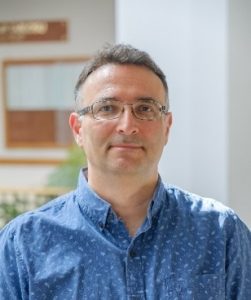
Machine Learning for Resolving Conflicts in Physical Human–Robot Interaction
Date: 14.09.2026 @ 10:00
Abstract:
Biography
Prof. Basdogan has been a faculty member in the College of Engineering at Koç University since 2002. Before joining Koç University, he was a Senior Member of the Technical Staff in the Information and Computer Science Division at NASA’s Jet Propulsion Laboratory (JPL), California Institute of Technology (Caltech), from 1999 to 2002. At JPL, he worked on the 3D reconstruction of Martian terrain models from stereo images captured by a rover and their haptic visualization on Earth. He joined JPL from the Massachusetts Institute of Technology (MIT), where he was a Research Scientist and Principal Investigator at the MIT Research Laboratory of Electronics and a member of the MIT Touch Lab from 1996 to 1999. At MIT, he was involved in the development of algorithms that enabled users to touch and feel virtual objects through a haptic device (a force-reflecting robotic arm).
He received his Ph.D. degree from Southern Methodist University in 1994 and subsequently worked on medical simulation and robotics at Musculographics Inc., located in the Northwestern University Research Park, for two years before joining MIT. Prof. Basdogan conducts research and development in the areas of human-machine interfaces, control systems, robotics, mechatronics, human-robot interaction, biomechanics, computer graphics, and virtual reality. In particular, he is known for his work in the field of human and machine haptics (the sense of touch), with applications in medical robotics and simulation, robotic path planning, micro-/nano-/optical telemanipulation, human-robot interaction, molecular docking, information visualization, and human perception and cognition. In addition to serving on the program and organizing committees of numerous international conferences and journals, he served as the General Chair of the IEEE World Haptics Conference in 2011.
Prof. Genliang Chen
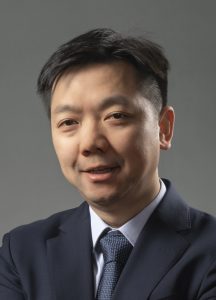
Integration of Structural Compliance and Intrinsic Sensing of Rigid-Flexible Hybrid Mechanisms
Date: 15.09.2026 @ 10:00
Abstract:
Hybrid mechanisms, incorporating rigid and flexible components, are an emerging form of robotics that bridges the gap between traditional rigid-body linkages and novel soft robots. Leveraging the structural compliance of elastic links, this novel kind of mechanism promises a broad range of potential applications in manipulations and human-robot collaboration. However, due to the complex deflection behaviors of flexible units, there are still significant challenges in the modeling, proprioceptive and environmental perception, and control of motion and structural deformations. In this talk, I will present our recent research progress on this topic, including the discretization-based modeling method for flexible units in general cases, the integration of sensing units to achieve precise and real-time perception (contact/tactile sensing), and feedback control strategies to endow rigid-flexible hybrid robots with manipulation and collaboration capacities. Various case studies will be provided to demonstrate the advantages of these novel mechanisms: the adaptivity to unstructured environments, sensor-based interactive manipulation, and fast-response operation. Additionally, the prospects and challenges for future research on these hybrid mechanisms will be addressed at the end of this talk.
Biography
Genliang CHEN received his B.S. and Ph.D. degrees, both in Mechanical Engineering, from Shanghai Jiao Tong University (SJTU), Shanghai, China, in 2006 and 2014, respectively. From the year 2016 to 2017, he was with the Biomimetic and Dexterous Manipulation Laboratory (BDML) at Stanford University as a visiting scholar. He joined the School of Mechanical Engineering at SJTU in 2018. Currently, he serves as the deputy director of the META Robotics Institute at SJTU. His research interests include mechanism design, flexible parallel manipulators, and robotics. He has published more than 100 journal/conference papers, including IEEE T-RO, IJRR, Nature Communications, Science Advances, MMT, and ASME JMR/JMD, etc. He serves as the associated editor of the Journal ‘Robotica’, ‘Meccanica’, et al. He has been honored with the Best Paper Award/Finalist from several international conferences, including Parallel 2020 and IEEE-ICIEA2023.
Assoc. Prof. Cosimo Della Santina
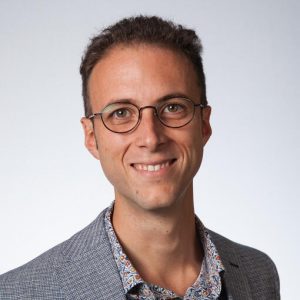
Controlling Deformability in Robotics: From Soft Robots to Large Deformable Objects
Date: 16.09.2026 @ 10:00
Abstract:
Biography
Cosimo Della Santina received the Ph.D. degree (cum laude) in Robotics from the University of Pisa in 2019. He is currently an Associate Professor at TU Delft (The Netherlands) and a Guest Research Scientist at the German Aerospace Center (DLR) in Munich. From 2017 to 2019, he was a Visiting Ph.D. student and Postdoctoral Fellow at the Computer Science and Artificial Intelligence Laboratory (CSAIL), Massachusetts Institute of Technology. Between 2020 and 2021, he served as a Senior Postdoctoral Researcher and Guest Lecturer at the Technical University of Munich. His research focuses on endowing unconventional robotic systems—especially those with elastic and soft components—with motor intelligence grounded in physics-based modeling and control theory. Dr. Della Santina co-directs the Delft AI Lab SELF and is a recipient of the NWO Veni Fellowship. His work has been recognized with the 2020 Georges Giralt Ph.D. Award, the 2023 IEEE RAS Early Career Award, and an ERC Starting Grant in 2024. In 2025, he co-founded the Swiss start-up Embodied AI, which develops safe and capable robots designed to operate in human environments.